
Three taikonauts aboard China’s Tiangong space station faced a danger from space debris just hours before their scheduled return to Earth. Their mission duration was extended due to the suspicion that the return capsule may have been damaged. Authorities have initiated an analysis to determine the extent of the damage and the plan for the safe return of the six taikonauts.
Three taikonauts—Chinese astronauts—serving on China’s Tiangong space station faced the risk of collision by a suspected piece of space debris just hours before their return to Earth. Following the incident, the crew’s return was indefinitely postponed, and officials launched an investigation to determine the extent of the damage to the capsule and when the taikonauts would return.
The trio of taikonauts, known as the Shenzhou-20 crew—comprising Wang Jie, Chen Zhongrui, and Chen Dong—had been on the Tiangong space station since April 24. They were expected to return to Earth on November 5 after successfully handing over their duties to the Shenzhou-21 crew, which arrived at the station on October 31. However, the China Manned Space Agency (CMSA) announced the delay on social media around 10:30 AM local time on Wednesday.
The official reason for the delay was cited as the “suspicion of a collision with small space debris” on the crew’s return capsule. The CMSA added that a collision analysis and risk assessment are currently underway to ensure the health and safety of the six taikonauts now aboard the station, but no further details were shared.
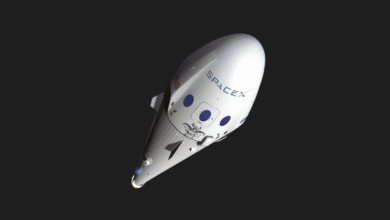
The potentially damaged spacecraft has been docked since it delivered the Shenzhou-20 crew to the station. This vehicle consists of three main sections: a power and propulsion module, a crew living area, and a parachute-assisted return module.
⚠️ What will happen if the capsule is damaged?

If any of these sections are deemed unsafe, the spacecraft will likely be sent back to Earth without the taikonauts. According to CMSA guidelines, in such a scenario, the Shenzhou-20 crew would return to Earth using the return module of the newly arrived Shenzhou-21. The Shenzhou-21 module would then be replaced by another backup spacecraft held in reserve by the CMSA.

This incident has also caused Shenzhou-20 Commander Chen Dong to further extend his record. Dong already holds the record for the cumulative number of days spent in space by a Chinese astronaut, having surpassed 400 days.
This situation is reminiscent of the experience of NASA astronaut Frank Rubio, whose return module was damaged by a micrometeoroid on the International Space Station (ISS), unintentionally breaking the record for the longest continuous spaceflight (371 days).
🌌 Space Debris Threat and the Kessler Syndrome
This is not the first time China’s space station has faced the danger of being affected by space debris. In 2023, one of the station’s solar panels was struck by debris, causing a partial power outage. As a result, additional protective shields were added to the exterior of the station during recent spacewalks.
The International Space Station also must constantly be repositioned to avoid large debris fragments, and parts like its robotic arm, Canadarm2, have sustained damage from collisions over the years.
The amount of space junk in Earth’s orbit is rapidly increasing with the growing number of spacecraft around our planet. Some experts are concerned that if this trend continues, it could lead to a theoretical but very real risk scenario known as the “Kessler Syndrome,” where collisions trigger a chain reaction that renders low Earth orbit unusable.
You Might Also Like;